![]()
Yeasts are single-celled fungi. As fungi, they
are related to the other fungi that people are more familiar with. These
include edible mushrooms available at the supermarket, common baker’s yeast
used to leaven bread, molds that ripen blue cheese and the molds that produce
antibiotics for medical and veterinary use. Many consider edible yeast and
fungi to be as natural as fruits and vegetables.

Yeast
Cells
Over 600 different species of yeast are known and
they are widely distributed in nature. They are found in association with other
microorganisms as part of the normal inhabitants of soil, vegetation, marine
and other aqueous environments. Some yeast species are also natural inhabitants
of man and animals. While some species are highly specialized and found only in
certain habitats at certain times of the year, other species are generalists
and can be isolated from many different sources.
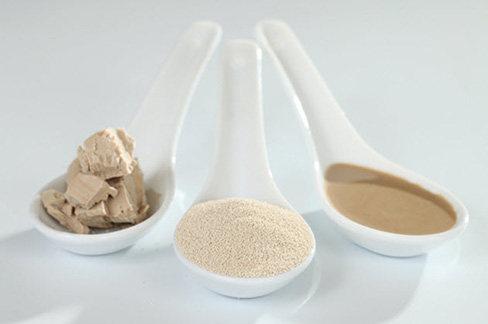
Baker’s
yeast is used to leaven bread throughout the world and it is the type of yeast
that people are most familiar with. Baker’s yeast is produced from the genus
and species of yeast called Saccharomyces cerevisiae. The scientific name of
the genus of baker’s yeast, Saccharomyces, refers to “saccharo” meaning sugar and
“myces” meaning fungus. The species name, cerevisiae, is derived from the name
Ceres, the Roman goddess of agriculture. Baker’s yeast products are made from
strains of this yeast selected for their special qualities relating to the
needs of the baking industry.
The typical yeast cell is approximately equal in
size to a human red blood cell and is spherical to ellipsoidal in shape.
Because of its small size, it takes about 30 billion yeast cells to make up to
one gram of compressed baker’s yeast. Yeast reproduce vegetatively by budding,
a process during which a new bud grows from the side of the existing cell wall.
This bud eventually breaks away from the mother cell to form a separate
daughter cell. Each yeast cell, on average, undergoes this budding process 12
to 15 times before it is no longer capable of reproducing. During commercial production,
yeast is grown under carefully controlled conditions on a sugar containing
media typically composed of beet and cane molasses. Under ideal growth
conditions a yeast cell reproduces every two to three hours.
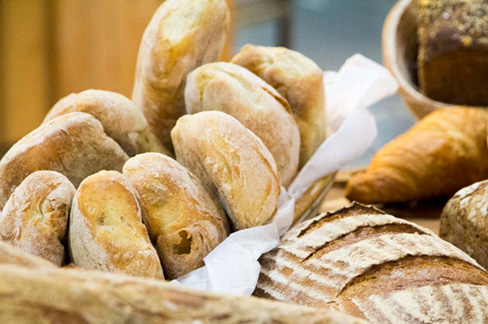
Yeast is the essential ingredient in many
bakery products. It is responsible for leavening the dough and imparting a
delicious yeast fermentation flavor to the product. It is used in rather small
amounts in most bakery products, but having good yeast and using the yeast
properly often makes the difference between success and something less than
success in a bakery operation.